A friction-driven belt moves because it grips the drive drum. A positive-drive belt moves because sprockets engage the belt directly. The difference decides how the elevator behaves under load, when the belt is wet and when it needs adjustment.
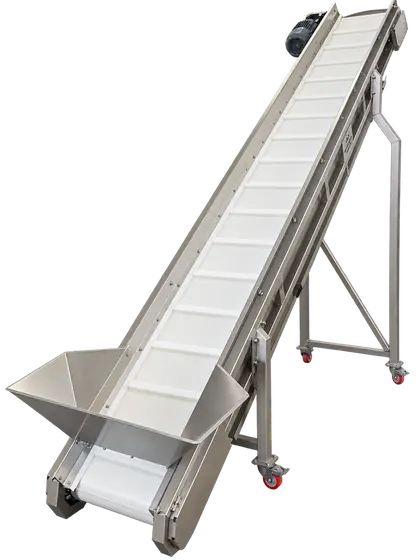
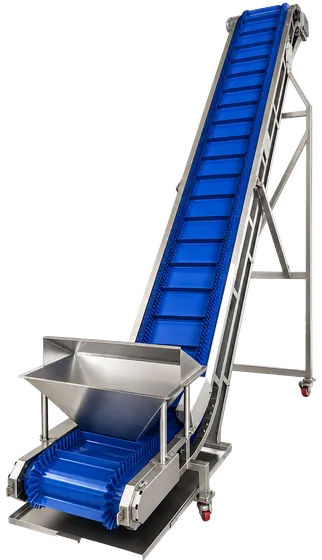
The positive-drive elevator is a cleated belt with side walls, driven by sprockets instead of friction, so it carries product up the incline under control. The cleated belt elevator runs a PVC or PU cleated belt driven by a geared motor.
How friction drive works
A friction-driven belt wraps around a drive drum. The grip between belt and drum pulls the belt along. The belt must be tight enough to grip and loose enough not to overload the bearings, so tension is a constant setting.
Friction drive is simple. The belt is a continuous sheet, the drum is a plain roller and the machine has few parts. Many elevators run this way without trouble.
Where friction drive loses grip
Grip falls when the contact between belt and drum changes.
- Water or oil on the drum. A film between belt and drum lets the belt slide. A wet line makes this more likely.
- Heavy load at the infeed. A full trough raises the force the belt must overcome. If the force exceeds the grip, the drum turns and the belt lags.
- A belt that has stretched. New belts settle in service. Slack reduces the contact on the drum.
- A worn drum surface. A polished or damaged drum has less grip than a clean one.
Slip shows as a belt that moves slower than the drum, a smell of hot plastic, or product that arrives at the top at an irregular pace.
How positive drive works
A positive-drive belt has a surface or structure that the sprockets engage. The sprocket teeth and the belt lock together, so the belt cannot slide on the drive. The belt travels the same distance for each turn of the sprocket, whatever the load or the water on it.
For an incline elevator, this gives a steady, controlled lift. The cleats and side walls keep the product between them, and the belt does not lose position under a heavy infeed.
Tension on each type
Tension is checked differently.
- Friction drive. The belt must be tight enough that the drum cannot slip under normal load. Tension is adjusted at the tail or the take-up and checked after the first running period, once the belt has settled.
- Positive drive. The belt does not rely on grip, so tension is set to keep the belt engaged with the sprockets and to hold the belt shape along the frame. Too tight loads the sprockets and the rods; too loose lets the belt sag and miss the teeth.
In both cases tension is checked at regular intervals and after any belt repair.
Cleaning
The drive area collects dirt on both systems, and the cleaning points differ.
- On a friction drive, wash the drum and the belt underside. Any film left on the drum shortens the grip.
- On a positive drive, clear the sprocket teeth and the area where they engage the belt. Packed soil or peel in the teeth stops the belt from seating properly.
- On both, check the return run, the rollers and the space behind the cleats.
Clean before the shift ends. Dried soil in a sprocket is harder to remove than wet soil.
Which suits which line
The position in the line points to the answer.
- Dry or lightly wet product, moderate lift. A friction-driven PVC belt is often sufficient and is simple to maintain.
- Heavy flow at the infeed, or a steep incline. A positive drive keeps the belt in step with the motor, so the lift stays controlled.
- Wet line, water at the drive. A positive drive does not depend on a dry drum, which removes a common cause of slip.
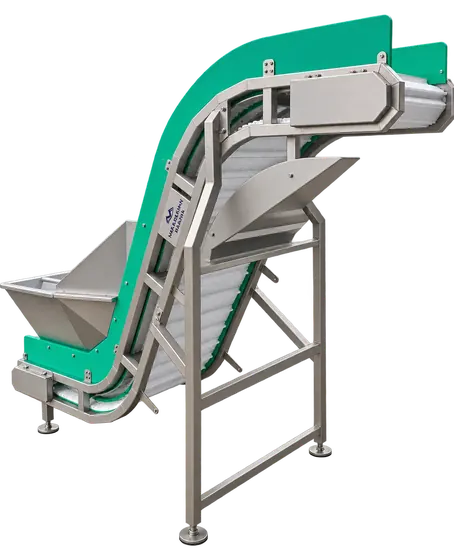
The Z-type elevator uses a perforated modular belt for steep transfers and drained product, and a modular belt is driven by sprockets by design.
Signs to watch for
A short list is enough for daily checks:
- The belt speed matches the motor speed
- No visible slip on the drum or sprocket
- The belt tracks straight and does not climb on one side
- Product arrives at the top at an even pace
- The teeth and the drum surface are clean
If any of these changes, stop the belt and look at tension and the drive before running on.